

Driven by curiosity, guided by service: New Mexico Department of Public Safety appoints Prakash Bhakta as New Chief Information Officer to lead Information Technology Division
When Prakash Bhakta talks about information technology, he doesn’t begin with computers or software. Instead, he points to a mindset that has guided him since childhood – an eagerness to explore, question and learn.
“From an early age, my curiosity about how and why things work led me down many rabbit holes,” said Bhakta.
That lifelong desire to understand complex systems eventually led him through studies in computer and electrical engineering, mathematics, physics and astrophysics. Along the way, he also built experience as a small business owner, developing skills in finance, operations and leadership that would later prove invaluable in public service.
Today, Bhakta brings that unique blend of technical expertise, business acumen and government experience to his role as the newly hired Chief Information Officer for the New Mexico Department of Public Safety’s Information Technology Division.
“Both sectors have shaped me significantly, said Bhakta. “Owning and operating small businesses taught me operational discipline, fiscal accountability, and the importance of delivering results with limited resources. My government roles – progressively more complex in scope and responsibility, gave me deep insight into how technology intersects with public policy, compliance frameworks, and mission-critical service delivery. The combination of entrepreneurial thinking and public sector experience is a lens I bring to every challenge here at the department.”
For Bhakta, joining the New Mexico Department of Public Safety and being selected as Chief Information Officer was never simply about technology. It was about mission.
“Public safety is one of the most consequential responsibilities a government can hold, and technology is the silent infrastructure standing behind every officer in the field,” he said. “The opportunity to directly support the men and women in uniform – to ensure they have the tools, systems and information they need to do their jobs safely and effectively is what drew me to this role above all else.”
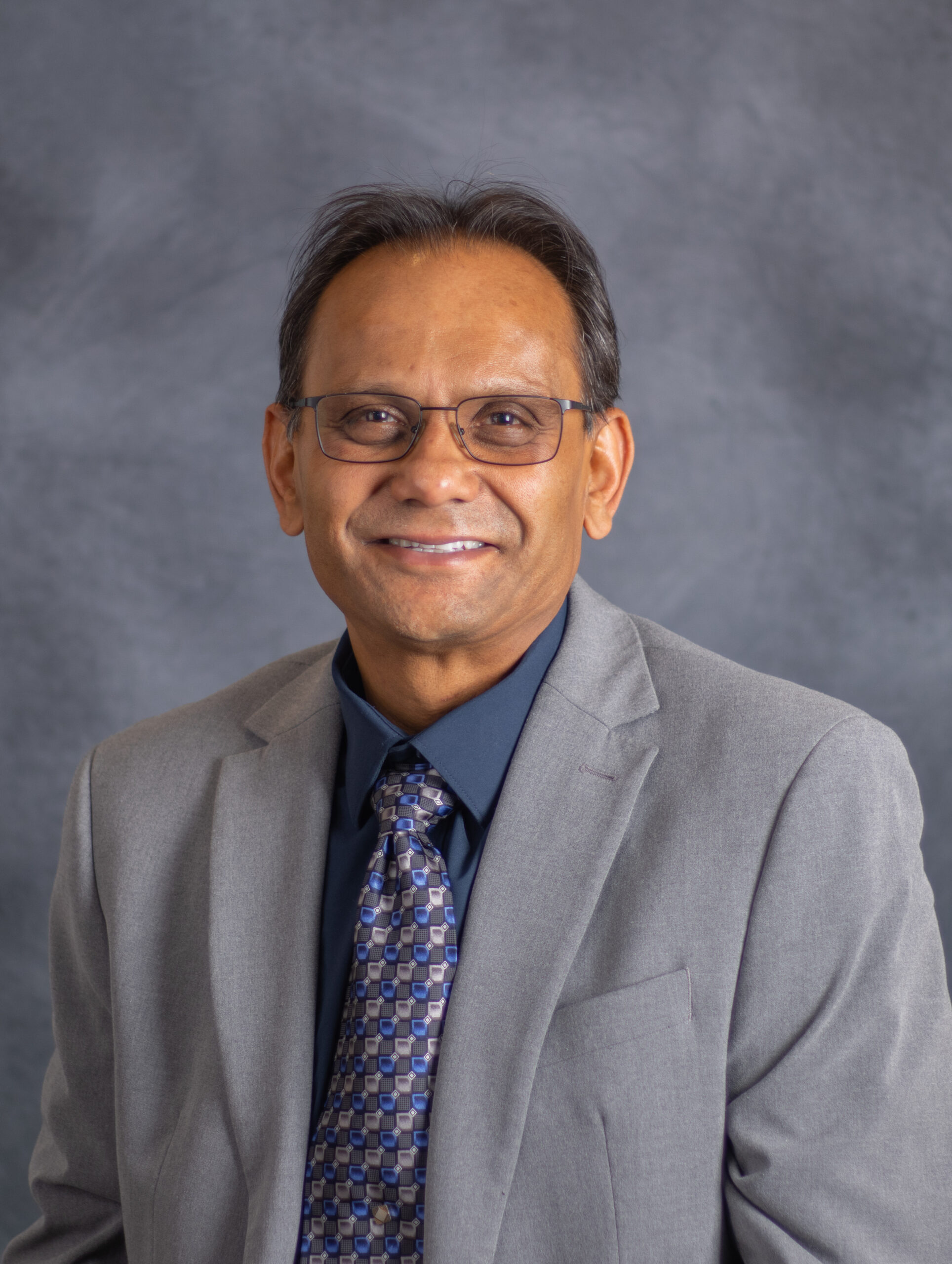
Throughout his career with the State of New Mexico, Bhakta has served in a variety of roles, including management analyst, computer technician, senior manager and CIO at multiple state agencies. Each position added a new perspective on how technology can support government operations and public service.
“Each chapter – the hard work, the lessons learned, the trials and perseverance, shaped who I am and prepared me for where I stand today,” he said.
Bhakta also said that his father played a major role in making him the person he is.
My father’s influence is present in everything I do,” he said. “He led his life with an unwavering work ethic, guided by a clear moral and ethical compass. He was deeply committed to community service and consistently put others before himself. Watching him live those values – not just talk about them, shaped the kind of leader I aspire to be.”
New Mexico Department of Public Safety Deputy Cabinet Secretary Sylvia Serna said Bhakta’s combination of leadership experience, technical knowledge and commitment to service made him a strong choice to lead the Information Technology Department.
“Prakash is a collaborative leader who values accountability, innovation and investing in the people around him,” she said. “We are confident his leadership will continue to advance the department’s technology capabilities and support the important work being done across the agency every day.
“And he understands that technology is not an end in itself – it’s a tool that helps us accomplish our mission and support the people who serve DPS. His focus on communication and service aligns closely with the values of the department.”
As he begins his tenure as Chief Information Officer, Bhakta has a clear vision for the future of the department’s technology environment.
“Three years from now, I want the department to have a secure, compliance-ready hybrid environment built on modern, stable infrastructure – one that delivers reliable services and supports modernized applications that put actionable information directly in the hands of officers in the field,” he said.
His first-year priorities focus on strengthening the foundation necessary to achieve that vision: improving communication across the Information Technology Division and with agency stakeholders, delivering responsive support to users, and increasing transparency in IT operations.
“Stakeholders deserve to know what we’re working on, where things stand, and how technology investments are delivering value,” Bhakta said.
Infrastructure modernization remains one of the biggest opportunities he sees for the department.
“You cannot build a reliable house on a shaky foundation, and the same holds true in technology,” he said. “Strengthening and modernizing that foundation creates the platform from which everything else can improve.”
For a department that supports critical law enforcement operations across one of the nation’s largest and most geographically diverse states, technology reliability is directly tied to officer effectiveness and safety.
“Our job in ITD is to make sure technology is a force multiplier, not a friction point,” Bhakta said. “Technology should reduce the burden, not create it.”
That philosophy extends to emerging technologies as well. While Bhakta sees tremendous potential in innovations such as artificial intelligence and advanced analytics, he emphasizes a measured approach.
“We won’t sacrifice stability for novelty,” he said. “But we also won’t ignore innovation out of caution. The right balance is deliberate adoption grounded in mission outcome.”
Serna believes that approach will serve the department well as technology continues to evolve.
“Public safety agencies must constantly adapt to new challenges, from cybersecurity threats to emerging technologies,” she said. “Prakash brings a thoughtful, strategic perspective that balances innovation with operational reliability.”
Bhakta is particularly focused on ensuring officers have access to the information they need when and where they need it. In a state where vast rural landscapes can create connectivity challenges, technology can make a critical difference.
“If I could eliminate one technology challenge overnight, it would be seamless, statewide connectivity for every officer in the field,” he said. “Officers shouldn’t have to think about it. It should just work, reliably and securely, in service of the public safety mission. Every gap is a moment where an officer may not have the information they need.”
Ultimately, Bhakta views every technology decision through the lens of officer safety and mission success.
“What does officer safety look like through the eyes of a CIO?” he reflected. “It means knowing that at the end of every shift, every officer had access to the information they needed, that the systems supporting them never let them down, and that they returned home safely to their families.”
As for the legacy he hopes to leave behind, the answer is simple.
“That I led by example, served selflessly, and left the organization in a measurably better place than I found it,” Bhakta said. “If the people who worked with me feel that their careers grew, that the mission was advanced, and that they were supported along the way – that’s the legacy I’m working toward.”
Story by New Mexico Department of Public Safety Public Information Officer John Heil. Photos by DPS Media Relations Unit – Payton Santillanes.
Legal Disclaimer:
EIN Presswire provides this news content "as is" without warranty of any kind. We do not accept any responsibility or liability for the accuracy, content, images, videos, licenses, completeness, legality, or reliability of the information contained in this article. If you have any complaints or copyright issues related to this article, kindly contact the author above.
